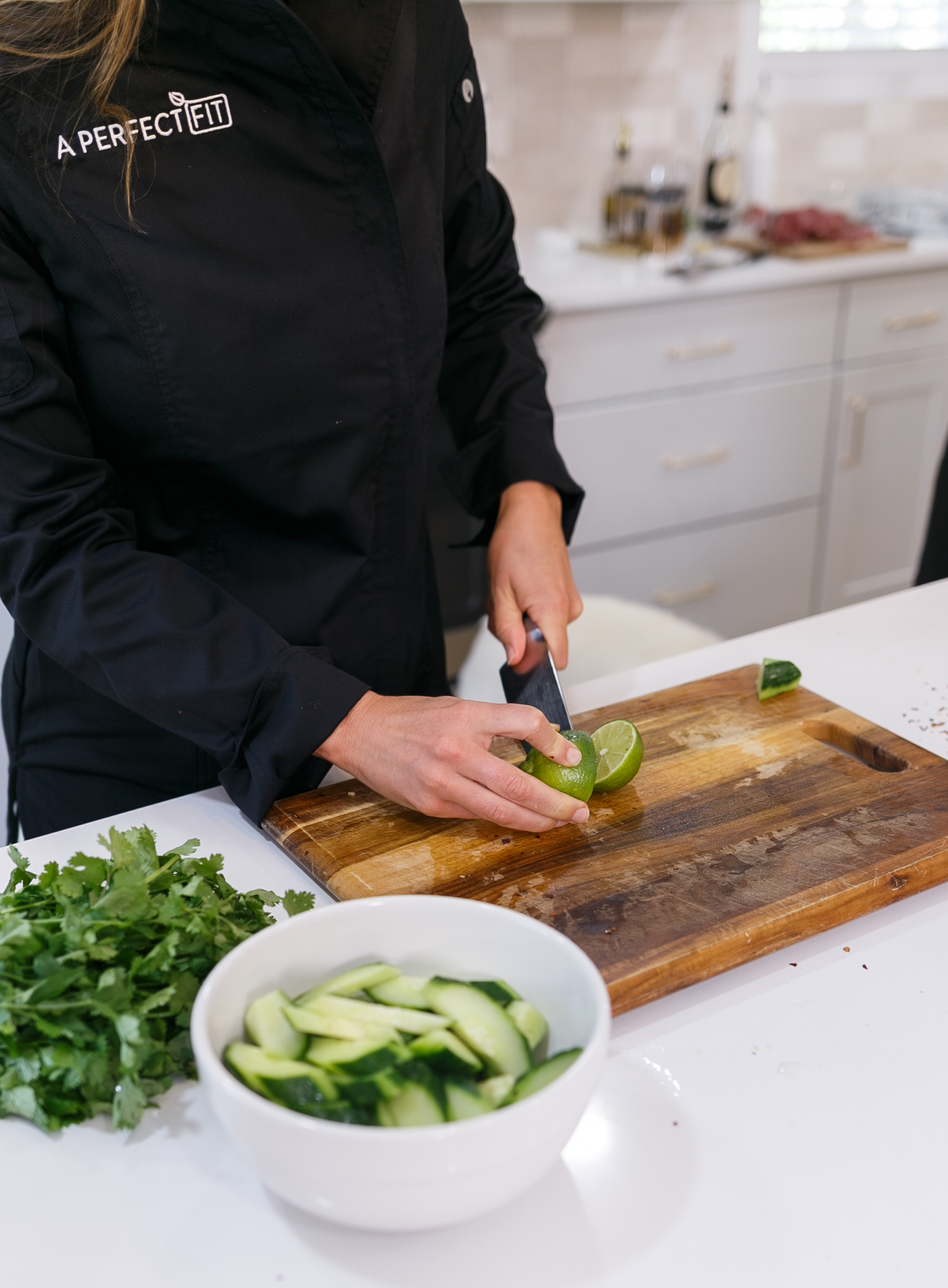
A private chef can make cooking for food allergies at home safer and easier by planning every menu around them, reading every label while shopping, and preventing cross-contact in your own kitchen. Because the same chef cooks for your household every visit, the allergy plan becomes routine rather than something re-explained each week.
For families managing a food allergy, dinner is never just dinner. Every new restaurant, takeout order or meal kit means checking ingredients, asking questions and hoping nothing was missed. Cooking at home gives you the most control over what goes into a meal, but it is also the most work. A private chef takes on that work while keeping the control that makes home cooking safer.
Why home cooking gives you more control
In a restaurant or a central kitchen, your meal shares surfaces, fryers and staff with hundreds of others. In your own kitchen, you control what comes through the door. A private chef cooks with your equipment, your pantry and only the ingredients bought for your household, so there is no shared commercial line and you know what was prepared alongside your meals.
How a private chef plans around allergies
It starts before the first menu
During your consultation and intake, we ask about every allergy and intolerance in the household, how severe each one is, and any guidance from your allergist or physician. That information goes into your household profile, so it travels with every menu your chef writes.
Menus are built allergy-first
Rather than taking a regular menu and removing ingredients, your chef plans dishes that are naturally free of the allergen, so nothing feels like a substitute. A nut-free household gets pesto made with sunflower seeds or herbs and olive oil; a dairy-free household gets creamy soups built on cauliflower, coconut milk or white beans. Where a household needs it, our registered dietitian helps make sure meals stay balanced when whole food groups are off the table.
Every label, every shop
Recipes change and products are reformulated, so your chef reads the label on every packaged ingredient, every time, including spices, broths and sauces where allergens often hide. If a label is unclear or carries a may-contain warning that matters for your household, it stays on the shelf. In the U.S., may-contain warnings are voluntary, so a product without one is not guaranteed free of cross-contact. If your allergist has told you to avoid certain products or brands, tell us and your chef will shop accordingly.
Preventing cross-contact in your kitchen
Cross-contact happens when a trace of an allergen reaches a safe food through hands, utensils, cutting boards or surfaces. In your home, your chef:
- Washes work surfaces with soap and water or a household cleaner before cooking begins. Sanitizing kills germs, but it does not remove allergens.
- Prepares allergen-free dishes first, before anything else that day.
- Uses separate or freshly washed cutting boards, knives and pans for allergen-free food.
- Washes hands with soap and water and changes tools between tasks. Hand sanitizer does not remove allergens.
- Uses fresh oil and clean pans for allergen-free food, never oil or water that has already cooked an allergen.
- Keeps allergen-containing ingredients for other family members clearly separated.
If only one person in your household has an allergy, we talk through whether the whole menu should be free of that allergen or whether some dishes can include it, and how those dishes are kept apart.
Storage and cleanup
When your chef finishes, meals are stored in your kitchen and the kitchen is reset, so no residue is left behind on counters or tools.
Common allergies we cook around
Our chefs regularly plan menus free of the nine major U.S. food allergens: milk, eggs, fish, shellfish, tree nuts, peanuts, wheat, soy and sesame. We also cook for gluten intolerance and celiac disease. With celiac disease, crumbs matter as much as ingredients: toasters, colanders, wooden boards and scratched nonstick pans can hold gluten, so we talk through which equipment in your kitchen should be kept gluten-free. Households with several restrictions at once are common, and the planning works the same way.
What a private chef does not replace
A private chef and a registered dietitian help you eat well and safely at home. They do not replace your allergist or physician. No home kitchen can be guaranteed completely free of an allergen, and we will always be clear with you about what we can and cannot control. Keep following your medical team's guidance, keep any prescribed emergency medication such as epinephrine on hand, make sure anyone who serves the meals knows your emergency plan, and tell us whenever that guidance changes so your menus can change with it.
Frequently asked questions
Can a private chef cook for severe food allergies?
Yes, with a plan built around your allergist's guidance. Your chef plans every menu around the allergy, reads every ingredient label and prevents cross-contact in your kitchen. Share the severity and your allergist's guidance at intake so the plan reflects it. No kitchen can promise zero risk, so we talk through the setup that fits your household's level of risk.
Will the same chef cook for us every visit?
Yes. Each A Perfect Fit chef serves only a few households and is never rotated between clients, so your chef knows your allergy plan and follows it every time.
Can you cook for one family member's allergy and not the rest?
Yes. We can keep the whole menu free of the allergen or keep specific dishes separate. We talk through which approach fits your household.
Do you work with a dietitian on allergy menus?
Yes. Our registered dietitian can help keep meals balanced when allergies remove whole food groups, such as dairy or wheat.
Cooking for allergies, handled
A Perfect Fit is a health-focused private chef service in St. Louis, Dallas, Houston, Nashville and Austin. Learn more about how we cook for medical and dietary needs, bring these questions to a short conversation, then request a consultation.
— A Perfect Fit Culinary Team